
Why G20 as international forum should take actions for Youth Employment Crisis in this Decade?
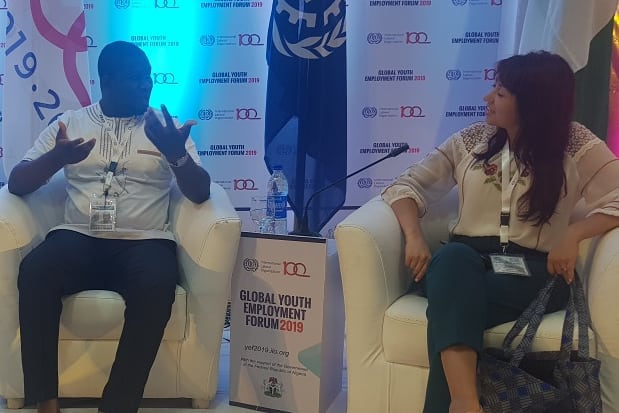
Topic 1: What is the most critical issue to be addressed by the G20, G7 and other global governance forums in 2020? In the next decade?
Presentation Title: Why G20 as international forum should take actions for Youth Employment Crisis in this Decade?
Author: Elvis Adjahoungba
Download: Preprint ResearchGate
Did you know that the issue of youth employment should be the most critical issue to be addressed by international forums such as the G20 during this decade?
Indeed, the Group of Twenty, or G20, is the first forum for international economic cooperation, it brings together leaders from developed and developing countries from all continents. Collectively, G20 members represent around 80% of global economic production, 2/3 of the world’s population and 3/4 of international trade.
The G20 was the crucible for the collective response to the last financial crisis; it now intends to continue and deepen its role in international cooperation and coordination. As such, representatives of the G20 countries meet to discuss financial and socio-economic issues. However, the issue of youth employment worldwide and therefore in the G20 countries should receive special attention. This is what led the Director-General of the International Labor Organization (ILO), Guy Ryder, to say that “Youth unemployment is the sharpest edge of the global labour crisis… But it is a challenge we must meet head on… In these times of crisis, governments are obviously concerned about the additional spending, but they should bear in mind the far higher cost that would come from young unemployed people permanently losing touch with the labour market”.
ILO statistics first show that job quality is a critical concern, as nearly three in four young workers are in informal jobs and more than 141 million live in poverty (less than US$3.10 per day) despite employment and more than 481 million workers of all ages will enter the global workforce by 2030, mainly in sub-Saharan Africa and South Asia. These statistics also show that young people around the world are three times more likely than adults to be unemployed, which means that around 71 million young people are looking for work. Matt Hobson, director of the S4YE coalition said that “Young people account for 40 percent of the world’s population – the largest youth generation in human history – but they are disproportionately affected by unemployment. This is a persistent problem. Approximately 30 percent of young people are not in employment, training or education, and around the world, young women are worse off. We need to act now, and we need to act together if we are going to realize the significant opportunities presented by this many young people today”.
Since the global economic downturn in 2009, labor productivity (measured as GDP per employed person in constant 2005 dollars) has increased worldwide, recording positive annual growth rates steadily since 2010. In 2017 and 2018, the Global labor productivity increased by about 2.1%, the strongest annual growth since 2010. The economic recovery has also strengthened the situation of young people in the labor market, the employment rate of 20-24 year olds steadily increasing since 2014. However, their employment prospects remain precarious. People in this age group were the hardest hit by the economic crisis and are still underrepresented in the labor market, with only 53.3% of 20-24 year olds employed in 2018, i.e. 1, 4 percentage points lower than before the crisis. In terms of numbers, the youth labor force decreased by 34.9 million between 1997 and 2017, although the youth population increased by 139 million people. Almost half of the world’s youth (aged 15-24) are in the workforce. Over the past 20 years, however, the proportion of young people who have actively entered the labor market, either by working or by looking for work (the global participation rate), has increased from 55.0% to 45.7%. This trend is partly due to the positive development of young people who stay in education longer. The less positive immediate implication is the consequent reduction in the availability of human resources for world production and a greater dependence on productive resources. In 2018, one fifth (around 22%) of young people worldwide were not in education, employment or training, which means that they did not acquire professional experience, nor did they acquire or develop skills through educational or professional programs during their early years. Globally, young women were more than twice as likely as young men to be unemployed or outside the workforce, not in education or training.
Global youth unemployment is therefore a growing global challenge that affects the ability of young people to participate fully in the economy and connect to the labor market. Income inequality, unemployment and deprivation can trigger alienation which contributes to instability, conflict and violent extremism. In addition, long-term unemployment can have lasting negative consequences for individuals and society by endangering social cohesion and increasing the risk of poverty and social exclusion. Beyond the material standard of living, it can also lead to a deterioration of individual skills and health, thus hampering employability, productivity and future income.
In addition to generating the resources necessary to ensure a decent standard of living and to achieve life goals, work offers opportunities for meaningful engagement in society, fostering a sense of self-worth, purpose and social inclusion. Increasing employment is an essential condition for making societies more inclusive by reducing poverty and inequalities within and between regions and social groups. The rising generations recognize that it is necessary to work collectively, beyond national, generational and other real or artificial borders, to change the current paradigm and create new global and multilateral structures, to weave a new tapestry of economic life, technological, environmental and social which can drive the evolution of humanity towards collective prosperity.
Placing job creation at the heart of economic policy and development plans in international forums such as the G20 will not only generate decent work opportunities, but also more robust, inclusive and poverty-reducing growth. It is a virtuous circle which is as good for the economy as it is for people and which drives sustainable development. Inclusive economic growth and decent employment are of vital importance for the development and prosperity of the G20 countries as well as for the well-being and personal achievement of individuals. For economic growth to be truly sustainable, it must be accompanied by improvements in eco-efficiency, climate control and resilient measures, as well as active labor market and social inclusion policies, in order to avoid damaging the natural environment on which it depends or to damage the social fabric of European societies. Sustainable economic growth therefore also involves creating jobs for all and improving the working conditions of those who already have jobs. Promoting youth employment in G20 countries and all around the world could include regulation to encourage the development of apprenticeship systems; and strengthen cooperation between businesses and VET institutions as well as universities and secondary schools. Young people should be included in the decision-making process in a fair and meaningful way. Trust in institutions is in decline, and this can only be resolved by working with young people. Policies often still fail to take into account the heterogeneity of young people and the contexts in which they live. Youth employment policies, strategies and interventions require diagnoses, integrated approaches and interdepartmental coordination while supporting strong multi-stakeholder inclusion from conception.
 English
  French