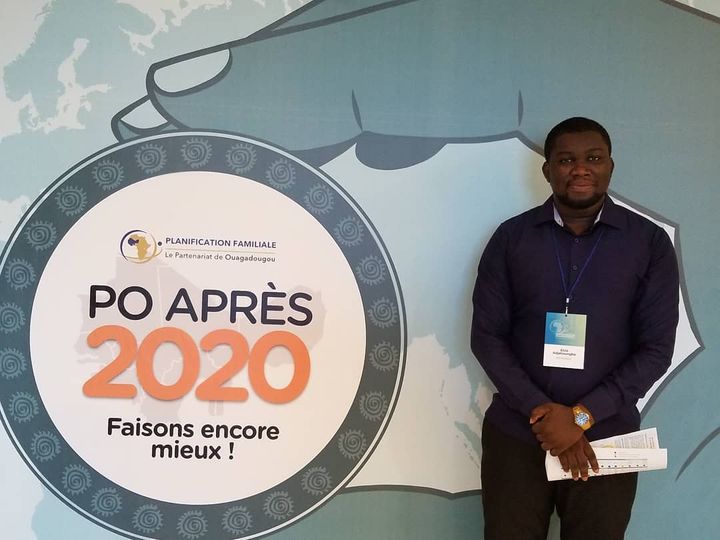
During the 8th Annual Meeting of the Ouagadougou Partnership, the focus on youth has been strong. Reflections were made on the mechanisms and access to funding for young people in the area of #ReproductiveHealth for Adolescents and #Jeunesse.
Through this parallel session we proposed several recommendations that will improve the participation of young people in Family Planning.
Donor government funding for family planning reached US $ 1.5 billion in 2018, the highest level since the launch of #FP2020. Seven donors increased their funding in 2018: Germany, Canada, Denmark, United States of America, Norway, Netherlands, and United Kingdom. While rising government funding largely due to the disbursement schedule, the other increases reflect the impact of the 2017 Family Planning Summit and renewed commitments from several donors.
Building on the new commitments made over the past year by Angola, the Central African Republic, The Gambia, the Elizabeth Glaser Pediatric AIDS Foundation and #UNAIDS, the #FP2020 partnership continues to grow. This brings the total number of committed countries to 132, including 46 of the 69 FP2020 target countries.
Young people are playing an increasingly important role in the partnership. By the end of 2019, the 1TP3Jeunesse focal points will have been appointed for each of the commitment-making countries and will take their place alongside governments, donors and civil society.
Launched by the International Youth Alliance for #FamilyPlanning (#IYAFP), the Partnership for #Maternal, Newborn and #Child Health (PMNCH), FP2020 and various partners in At the end of 2018, the Global Consensus Statement on Effective Youth and Youth Participation (MAYE) is now based on a #Youth-Led Accountability Framework.
 French
  English